Rules
How to Write Case Study Budget Notes for Marketing Campaigns
Case study budget notes: how to label costs, estimates, grants and sponsorship so marketing readers are not misled. Includes a provenance card and disclosure rules.
What to take away
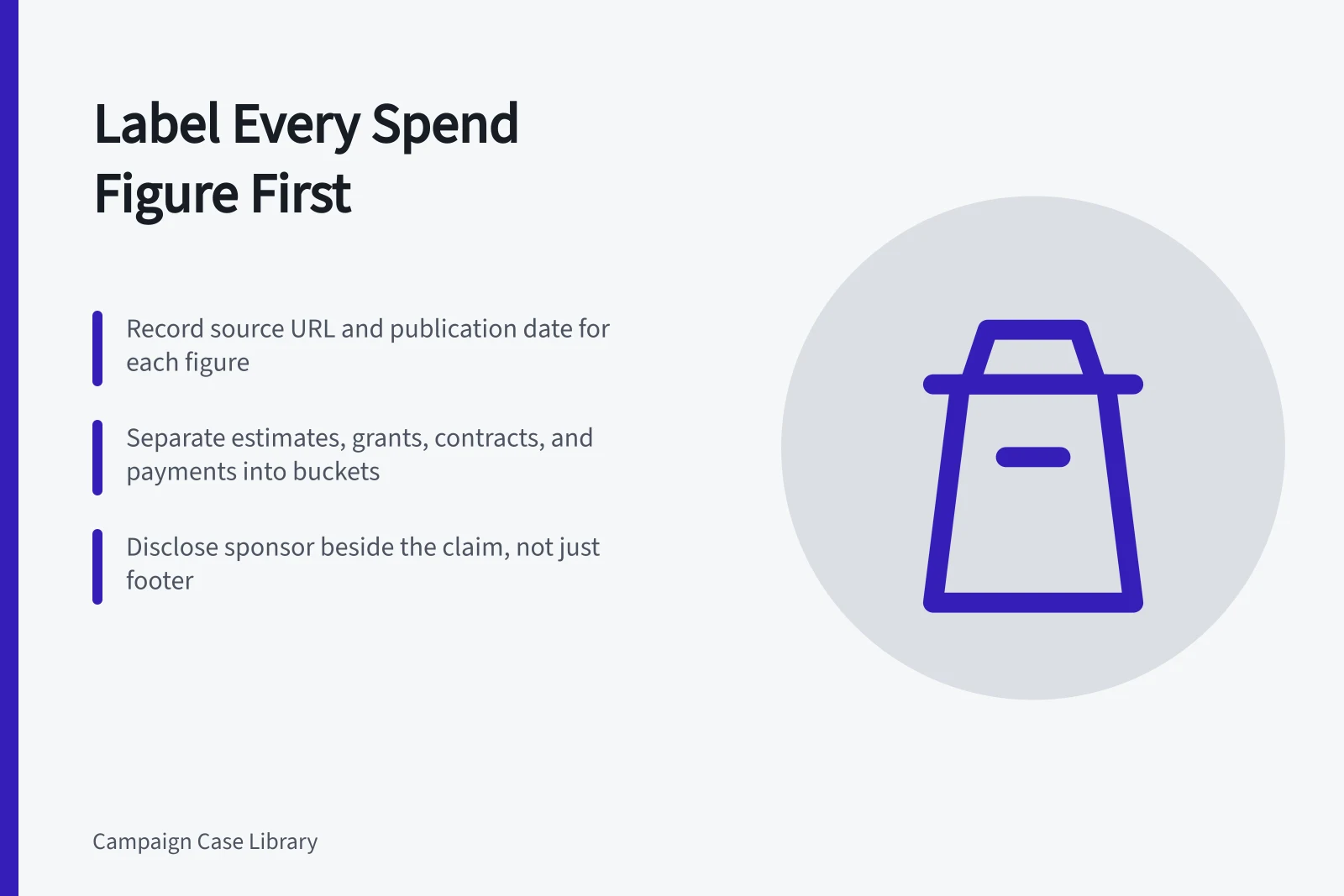
- Label every spend figure with a source, a date, and a scope.
- Keep estimates, grants, contracts, and payments in separate buckets.
- Build one provenance card per figure before drafting the sentence.
- Disclose a sponsor beside the claim, not only in the footer.
- Publish the gap when two sources disagree.
Label each spend figure before it appears
A case study that quotes a media spend without a date is a price list with a story attached.
Most of these figures start life in a monthly client report. The labeling discipline in marketing report templates applies here without change.
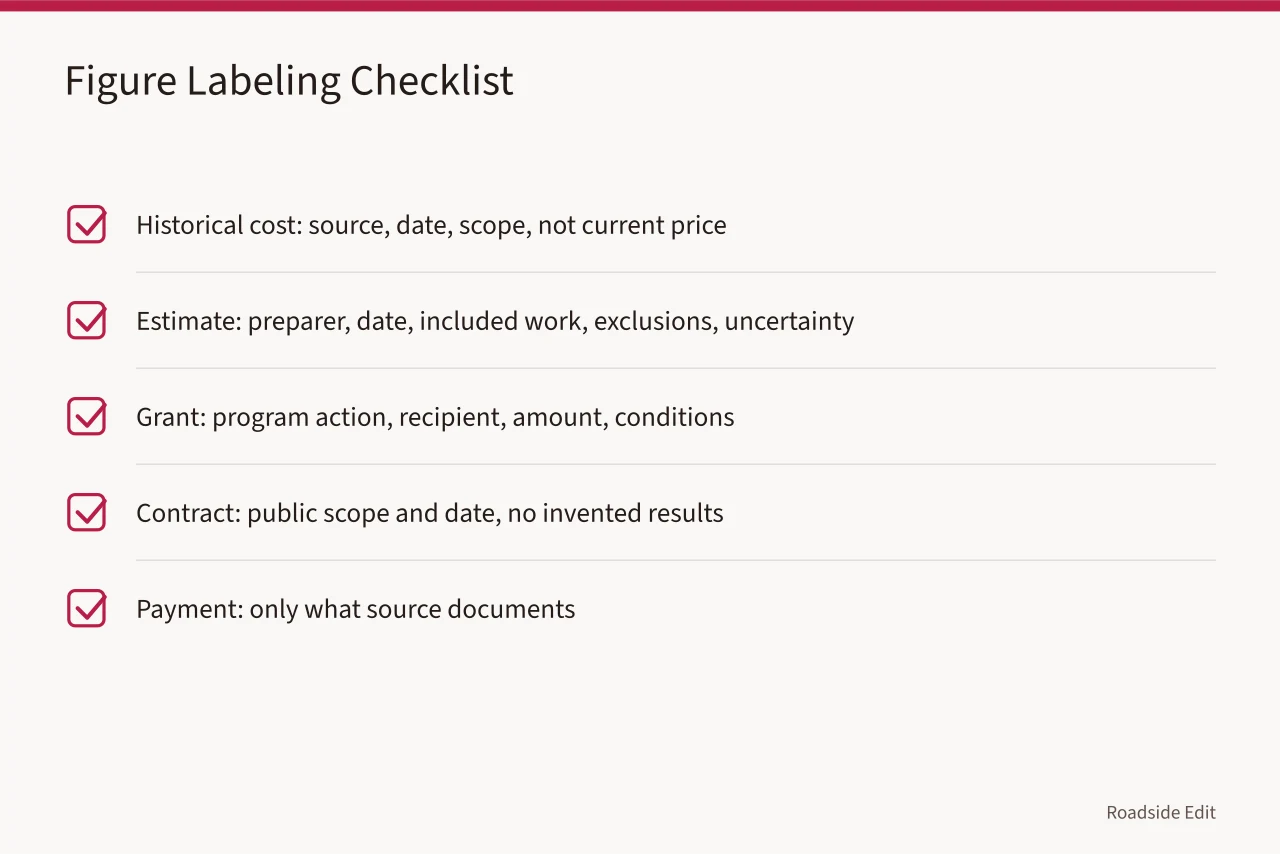
| Figure type | What the case study should say |
|---|---|
| Historical spend | Source, date, channel, scope, and why it is not a current rate. |
| Agency estimate | Who prepared it, date, deliverables, exclusions, and uncertainty. |
| Grant | Program action, named recipient, confirmed amount, and conditions. |
| Contract | Publicly available scope and date, with no claim about results. |
| Payment | Only what the source specifically documents. |
The GAO examined how federal agencies measure advertising and marketing contracts and found performance reporting trailing spending. A contract value shows what was committed, not what worked. Read the GAO report on federal advertising contracts.
One provenance card per spend figure
One card per figure takes about four minutes to complete and saves an hour of checking later.
When the figure is an estimate, quote the scope from your marketing proposal templates instead of rebuilding it from memory.
The proposal states what was offered. It cannot state what was delivered.
- Write the campaign name exactly as the source states it.
- Record the source URL and the date it was published or updated.
- Note the amount, the currency, and the kind of record it is.
- List the work included and the work excluded.
- Paste the one draft sentence that depends on the figure.
A number without a scope clause is a rumor with a currency symbol.
Example: one line from a paid social case study
The same spend, written two ways.
Weak: The campaign cost $42,000 and delivered a 4x return. Strong: The agency invoice reports $42,000 in media for the stated flight. The client dashboard reports a 4x return on that spend.
Neither line claims that the work caused the result. The objective, audience, and flight come from the campaign brief template that opened the project.
Sponsorship, paid placement, and image credit
The FTC's endorsement guidance covers disclosure of a material connection when it could affect how readers weigh a claim. That standard reaches a sponsored case study that reads like editorial. Read the FTC guidance on disclosing material connections.
For bought profiles, the FTC explains when sponsored content must be identified as advertising and where the label belongs. Check the FTC native advertising guide.
A sponsorship note does not make a claim false. It tells the reader who is speaking. Keep provider-supplied copy separate from the sourced narrative and mark which parts the sponsor supplied.
Strategy documents solve a similar problem, since goals and tactics sit in separate sections. Use marketing strategy templates as the model for keeping sponsor copy and editorial copy apart.
Image rights belong in the same record. National Park Service copyright guidance for heritage documentation notes that age or online availability does not prove permission to reuse a photograph, map, or drawing.
Sources, dates, and the wording you publish
Use one wording pattern for each figure type. A grant notice becomes: the notice awards the stated amount for the named activity. A proposal becomes: the provider proposed the listed scope on the stated date.
An unresolved difference becomes its own line: the reviewed sources do not report a spend figure. Range estimates should carry an illustrative label and a date.
Budget line structure belongs in the plan, not in the case study. The category list in marketing plan template sections shows where a media line ends and a production line begins.
Readers can inspect a dated record. They cannot inspect a rounded number.