Operations
Part of Building Marketing Proposal Templates That People Actually Use
Before You Settle on Proposal Templates, Work Through These Steps
how to create marketing proposal templates by auditing work, mapping gates, separating reusable layers, adding compliance, piloting, and governing the master.
What to take away
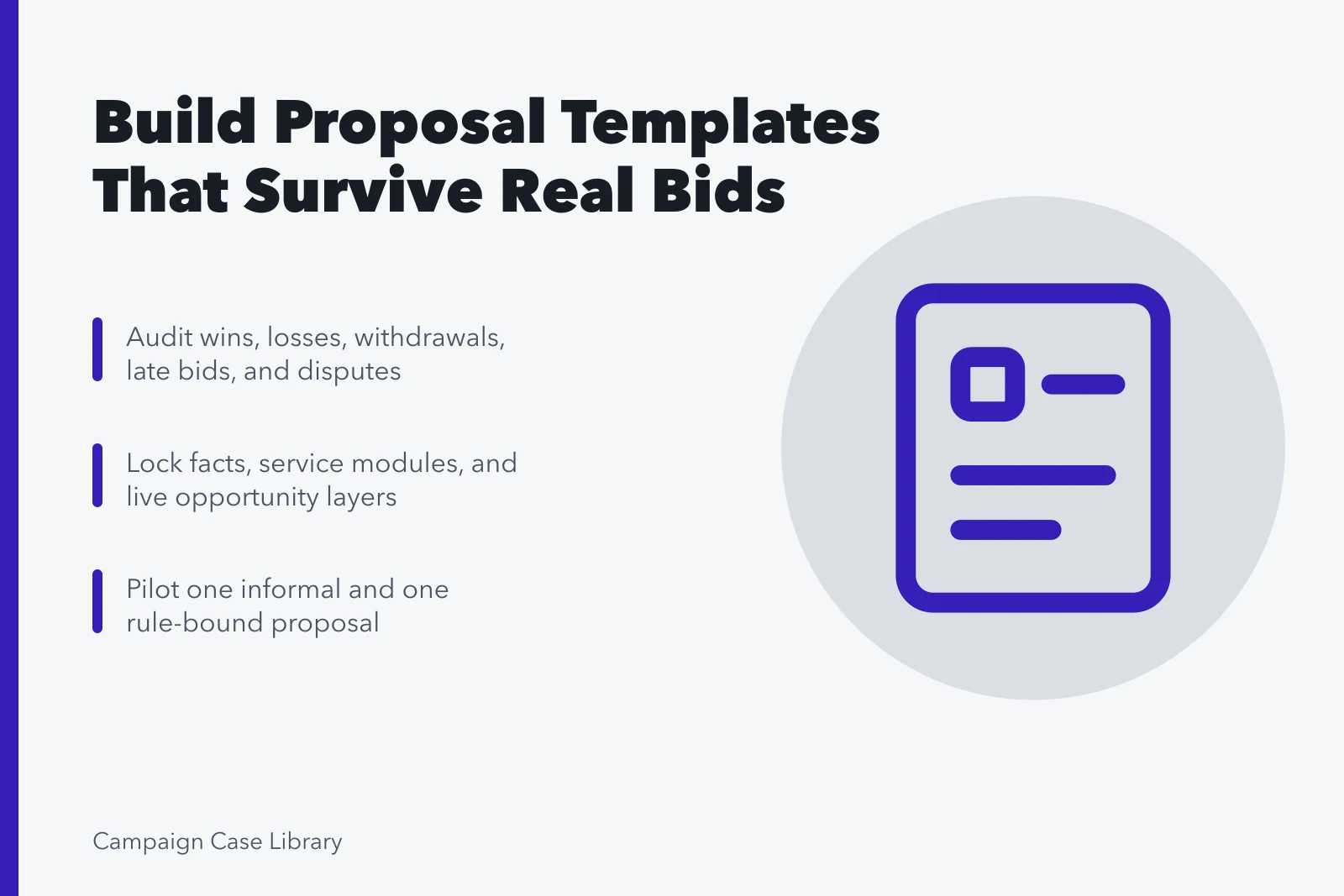
- Audit wins, losses, withdrawals, late bids, delivery disputes, corrections, and smooth handoffs before designing reusable pages.
- Separate verified company facts, governed service modules, and opportunity-specific reasoning so reuse does not flatten the buyer's situation.
- Pilot one informal and one rule-bound proposal, then govern ownership, approval, expiry, training, archives, and edits to the master.
How to create marketing proposal templates starts with the buyer's evaluation and the seller's delivery process. Build a controlled system for accurate reuse, then leave protected space for opportunity-specific diagnosis, reasoning, scope, evidence, price, and risk.
Audit the proposal process
The UK government's SME bidding guide covers bid roles, evidence types, answer structure, evaluator findability, common failure points, and evaluation gates. Use it as one public-sector reference and adapt the audit to the buyer, the market, and the seller's delivery process.
Sample wins, losses, withdrawals, late submissions, scope disputes, and smooth deliveries. Track missing requirements, inaccurate claims, repeated edits, price mismatches, approval delays, and commitments the delivery team questioned. Interview sales, strategy, operations, finance, legal, and buyers where feedback is available.
Map decisions and gates
Define qualification, bid decision, intake, discovery, solution, scope, estimate, evidence, writing, reviews, production, submission, negotiation, handoff, and archive. Name owners and entry or exit conditions. A template cannot repair an undefined process, so document the operating path before designing pages. Much of what a response must answer is fixed upstream, in the campaign brief templates the buyer issues.
Build three content layers
Lock verified company facts, policies, credentials, and approved legal references. Maintain modular service methods, team profiles, case evidence, deliverable definitions, and pricing logic with owners and expiry. Reserve buyer situation, insight, solution, schedule, scope, assumptions, options, and executive summary for the live opportunity.
Create a compliance module
CanadaBuys' bid-evaluation overview distinguishes mandatory and point-rated technical criteria and explains that the tender notice states the selection method and thresholds. Convert only the actual buyer's published requirements into fields, rather than importing Canadian rules into unrelated proposals.
Add fields for source documents, amendments, mandatory criteria, scored criteria, response location, evidence, word limits, attachments, declarations, filenames, portal, deadline, and final reviewer. The module can be optional for informal proposals but mandatory for structured solicitations.
Write evidence-bearing prompts
Ask for source, date, definition, geography, method, result, seller contribution, limitation, owner, permission, and expiry. Require qualified claim review for performance, savings, reach, speed, or return. Proposal claims carry the same burden of proof that credible marketing case studies do.
Pilot and maintain
Test one short direct proposal and one scored response. Have an uninvolved reviewer find every requirement and reconcile narrative, scope, price, schedule, and evidence. Measure production time, review cycles, errors, clarifications, and loss reasons. Version the master, archive old modules, and train users on what may and may not be edited.
Keep a portable approved output even if the working system is online. Review accessibility and document properties, then confirm the delivery team accepts every commitment before submission.
Template creation sequence
| Stage | Output | Failure to prevent |
|---|---|---|
| Audit | Defects, useful controls, delivery feedback | Designing from one winning file |
| Map | Owners, gates, evidence, handoffs | Automating an undefined process |
| Build | Facts, modules, live-opportunity space | Copying stale or generic claims |
| Pilot and govern | Observed fit, versioned master, archive | Uncontrolled reuse |
Run a controlled handoff
The GOV.UK technology selection guidance recommends adaptable choices, data control, security review, and ownership-cost analysis. Use those questions when assessing the tool, not as endorsements. The pages a master keeps are set out in the marketing proposal template sections.
The CISA software acquisition fact sheet covers development practice, supply-chain exposure, and vulnerability management. Add those questions to the review, not as approval.
Common questions
How many old proposals should be audited?
Use a varied sample large enough to expose recurring issues across outcomes, proposal types, buyers, markets, and values. Record the sample limits.
What content should be locked?
Lock only verified material that should not change casually: approved company facts, credentials, controlled claims, policy statements, and reviewed terms.
Who should test the template?
Include sales, strategy, delivery, finance, production, and an uninvolved evaluator who can test findability without the author's narration.